Showing posts with label build an new home. Show all posts
Showing posts with label build an new home. Show all posts
Friday, July 28, 2017
Building a new home
Expert help is available so you don't have to navigate the thousands of choices by yourself.
Call, text or email to discuss your unique situation.


Monday, May 9, 2016
Wondering Why the Price of a New Home is so High
Remember this as you vote in your local, sate and Federal elections. All those regulations come with a steep cost.
Regulations Add a Whopping $84,671 to New Home Prices
A new NAHB study shows that, on average, government regulations account for 24.3% of the final price of a new single-family home.
Three-fifths of the regulatory costs – 14.6% of the final house price – is due to a higher price for a finished lot resulting from regulations imposed during the lot’s development. The other two-fifths – 9.7% of the house price – is the result of costs incurred by the builder after purchasing the finished lot.
NAHB’s previous 2011 estimates were fairly similar, showing that regulation on average accounted for a quarter of a home’s price. However, the price of new homes has gone up quite a bit since then.
Applying percentages from NAHB’s studies to Census data on new home prices during this five-year span shows that regulatory costs for an average single-family home went from $65,224 to $84,671 – a 29.8% increase.
By comparison, disposable income per capita increased by 14.4% from 2011-2016. In other words, the cost of regulation in the price of a new home is rising more than twice as fast as the average American’s ability to pay for it.
For help with your new home, call, text or email
Wednesday, April 22, 2015
The Importance of Your New Home Walk-through
Advice from the National Association of Home Builders
 Before you go to settlement on your purchase of a newly constructed home, you and your builder will do a walk-through to conduct a final inspection.
This walk-through provides an opportunity to spot items that may need to be corrected or adjusted, to learn about the way your new home works and to ask questions about anything you don't understand.
Often, a builder will use the walk-through to educate buyers about:
When you buy a new appliance or piece of equipment, such as a printer or a washing machine, you usually have to read the instructions before you understand how to use all of the features. With a new house, you will receive a stack of instruction booklets all at once. It helps if someone takes the time to show you how to operate all of the kitchen appliances, heating and cooling systems, water heater and other features. Such an orientation is particularly useful because people often are so busy during a move that they have trouble finding time to carefully read instruction booklets.
Maintenance Responsibilities
Part of your walk-through will be learning about maintenance and upkeep responsibilities. Most new homes come with a one-year warranty on workmanship and materials. However, such warranties do not cover problems that develop because of failure to perform required maintenance. Many builders provide a booklet explaining common upkeep responsibilities of new home owners and how to perform them.
Should a warranted problem arise after you move in, the builder is likely to have a set of warranty service procedures to follow. Except in emergencies, requests for service should be in writing. This helps to ensure that everyone clearly understands the service to be performed.
Builder Visits During the Year
Many builders schedule two visits during the first year — one near the beginning and the other near the end — to make necessary adjustments and to perform work of a non-emergency nature. Don't expect a builder to rush out immediately for a problem such as a nail pop in your drywall. Such problems occur because of the natural settling of the house and are best addressed in one visit near the end of the first year.
Before You Move In: The New Home Walk-Through
|  |
Before you go to settlement on your purchase of a newly constructed home, you and your builder will do a walk-through to conduct a final inspection.This walk-through provides an opportunity to spot items that may need to be corrected or adjusted, to learn about the way your new home works and to ask questions about anything you don't understand.
Often, a builder will use the walk-through to educate buyers about:
- The operation of the home's components.
- The buyer's responsibilities for maintenance and upkeep.
- Warranty coverage and procedures.
- The larger community in which the home is located.
When you buy a new appliance or piece of equipment, such as a printer or a washing machine, you usually have to read the instructions before you understand how to use all of the features. With a new house, you will receive a stack of instruction booklets all at once. It helps if someone takes the time to show you how to operate all of the kitchen appliances, heating and cooling systems, water heater and other features. Such an orientation is particularly useful because people often are so busy during a move that they have trouble finding time to carefully read instruction booklets.
Maintenance Responsibilities
Part of your walk-through will be learning about maintenance and upkeep responsibilities. Most new homes come with a one-year warranty on workmanship and materials. However, such warranties do not cover problems that develop because of failure to perform required maintenance. Many builders provide a booklet explaining common upkeep responsibilities of new home owners and how to perform them.
Should a warranted problem arise after you move in, the builder is likely to have a set of warranty service procedures to follow. Except in emergencies, requests for service should be in writing. This helps to ensure that everyone clearly understands the service to be performed.
Builder Visits During the Year
Many builders schedule two visits during the first year — one near the beginning and the other near the end — to make necessary adjustments and to perform work of a non-emergency nature. Don't expect a builder to rush out immediately for a problem such as a nail pop in your drywall. Such problems occur because of the natural settling of the house and are best addressed in one visit near the end of the first year.
Your Inspection Checklist
Create a checklist when inspecting the house. The list should include everything that needs attention, and you and your builder should agree to a timetable for repairs. Builders prefer to remedy problems before you move in because it is easier to work in an empty house. Some items may have to be corrected after move-in. For instance, if your walk-through is in the winter, your builder may have to delay landscaping adjustments until spring.
It is important that you be thorough and observant during the walk-through. Examine all surfaces of counters, fixtures, floors and walls for possible damage carefully. Sometimes disputes arise because a buyer may discover a gouge in a counter top after move-in, and there is no way to prove whether it was caused by the builder's workers or the buyer's movers. Many builders ask their buyers to sign a form at the walk-through stating that all surfaces have been inspected and that there is no damage other than what has been noted on the walk-through checklist.
Ask a lot of questions during the walk-through and take notes on the answers. Don't worry about asking too many questions. That is how you learn. It is important to view the walk-through as a positive learning experience that will enhance the enjoyment of your new home.
As one who has built hundreds of homes, I know how critical the walk-through can be.
If you would like to discuss how this relates to your unique situation call, text or email.
Monday, May 12, 2014
Buyers prefer new but are they willing to pay?
41% of Americans Would Prefer to Build their Home
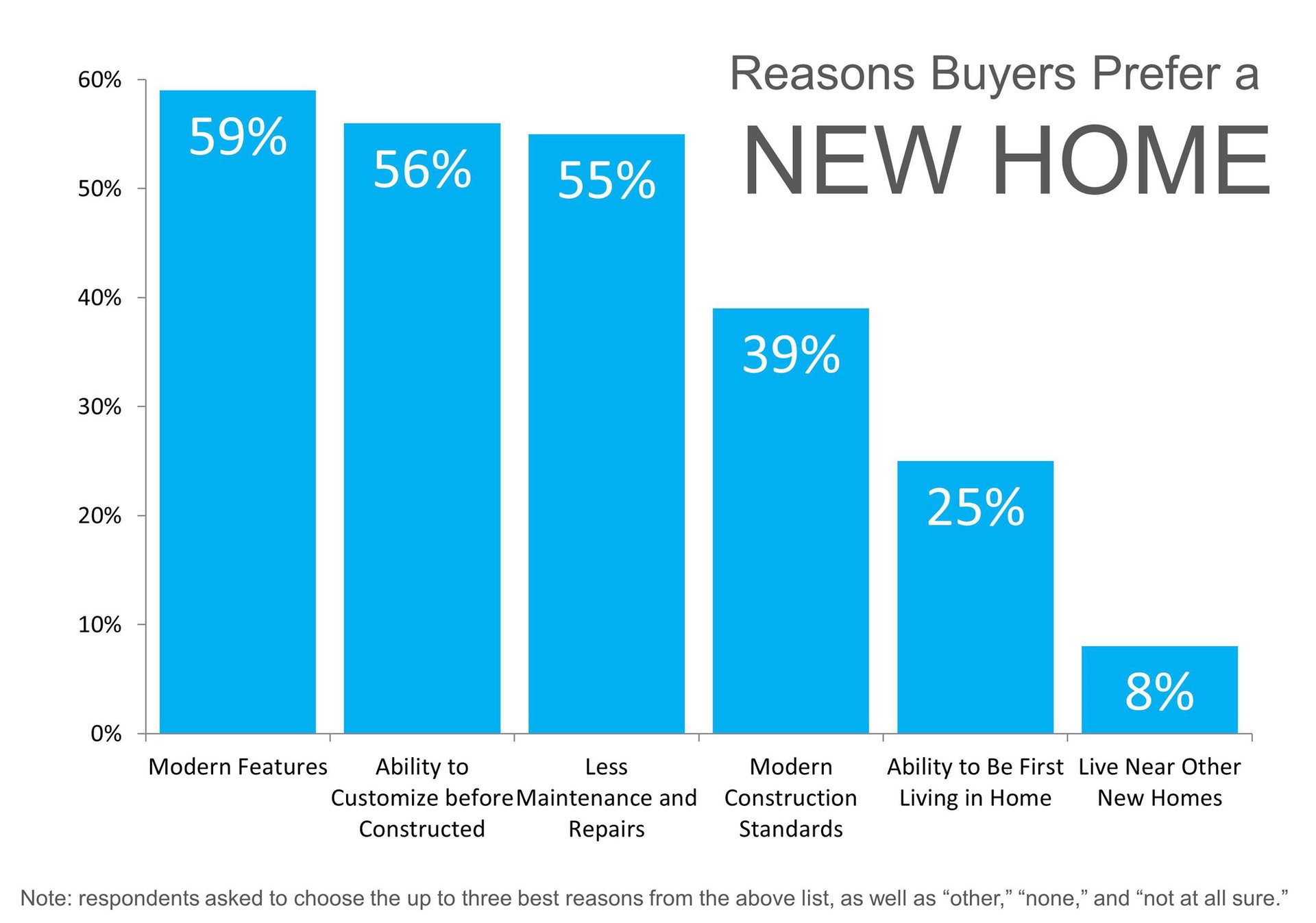
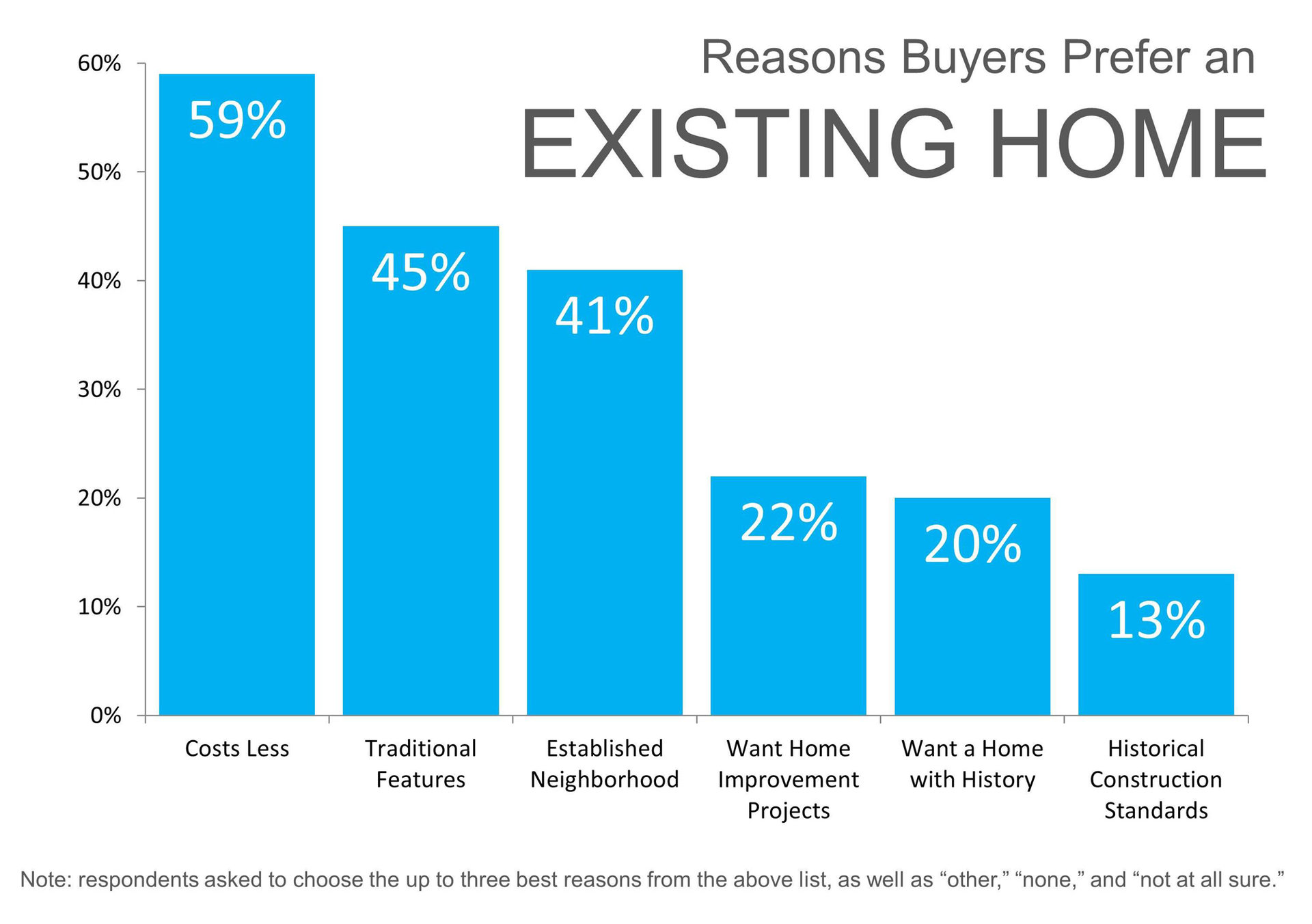
A recent study by Harris Poll revealed that, for the same price, forty one percent of Americans would prefer to buy a newly built home instead of an existing home. Twenty one percent prefer an existing home while thirty eight percent didn’t have a preference.
*Trulia estimates “that new homes built in 2013 or 2014 are typically priced 20 percent higher than older homes of a similar size and location.”
Why People Prefer a New Home?
Why People Prefer an Existing Home?
Subscribe to:
Posts (Atom)
