Showing posts with label build net worth. Show all posts

Tuesday, July 19, 2016

A Homeowner's Net Worth is 45x Greater than a Renter's
A Homeowner’s Net Worth is 45x Greater Than a Renter’s! | Simplifying The Market

Every three years, the Federal Reserve conducts a Survey of Consumer Finances in which they collect data across all economic and social groups. The latest survey, which includes data from 2010-2013, reports that a homeowner’s net worth is 36 times greater than that of a renter ($194,500 vs. $5,400).
In a Forbes article, the National Association of Realtors’ (NAR) Chief Economist Lawrence Yun predicts that in 2016 the net worth gap will widen even further to 45 times greater.
The graph below demonstrates the results of the last two Federal Reserve studies and Yun’s prediction:

Put Your Housing Cost to Work for You

Simply put, homeownership is a form of ‘forced savings.’ Every time you pay your mortgage, you are contributing to your net worth. Every time you pay your rent, you are contributing to your landlord’s net worth.
The latest National Housing Pulse Survey from NAR reveals that 85% of consumers believe that purchasing a home is a good financial decision. Yun comments:
“Though there will always be discussion about whether to buy or rent, or whether the stock market offers a bigger return than real estate, the reality is that homeowners steadily build wealth. The simplest math shouldn’t be overlooked.”

Bottom Line

If you are interested in finding out if you could put your housing cost to work for you by purchasing a home, let’s get together to discuss your next steps.


Monday, January 4, 2016

Building Family Wealth


Building Family Wealth Over The Next 5 Years | Simplifying The Market

Building Family Wealth Over The Next 5 Years

As the economy continues to improve, more and more Americans are seeing their personal financial situations also improving. Instead of just getting by, many are now beginning to save and find other ways to build their net worth. One way to dramatically increase their family wealth is through the acquisition of real estate.
For example, let’s assume a young couple purchases and closes on a $250,000 home in January. What will that home be worth five years down the road?
Pulsenomics surveys a nationwide panel of over one hundred economists, real estate experts and investment & market strategists every quarter. They ask them to project how residential prices will appreciate over the next five years. According to their latest survey, here is how much value that $250,000 house will gain in the coming years.
Family Wealth Earned Through Home Equity | Simplifying The Market
Over a five year period, that homeowner can build their home equity to over $40,000. And, in many cases, home equity is large portion of a family’s overall net worth.

Bottom Line

If you are looking to better your family’s long-term financial situation, buying your dream home might be a great option.
If you are ready to explore this way of building your family's wealth, just call, text or email

Monday, November 23, 2015

Are Your Housing dollars helping you build wealth


Equity Matters A LOT... Just Ask Freddie Mac | Simplifying The Market


Equity Matters A LOT… Just Ask Freddie Mac

There are many reasons, both financial and non-financial, that homeownership remains an important part of the American Dream. One of the biggest reasons is the fact that it helps build family wealth. Recently, Freddie Mac wrote about the power of home equity. They explained:
“In the simplest terms, equity is the difference between how much your home is worth and how much you owe on your mortgage. You build equity by paying down your mortgage over time and through your home's appreciation. In a nutshell, your money is working for you and contributing toward your financial future.”
They went on to show an example where a person bought a home for $150,000 with a down payment of 10% ($15K), resulting in a loan amount of $135,000. The buyer secured a 30-year fixed-rate mortgage at 4.5% with a monthly mortgage payment of $684.03 (not including taxes and insurance).
The chart below demonstrates the home equity built after 7 years of making mortgage payments and assuming the historic national average of 3% per year home appreciation:
Home Equity | Simplifying The Market

And that number continues to build as you continue to own the home.

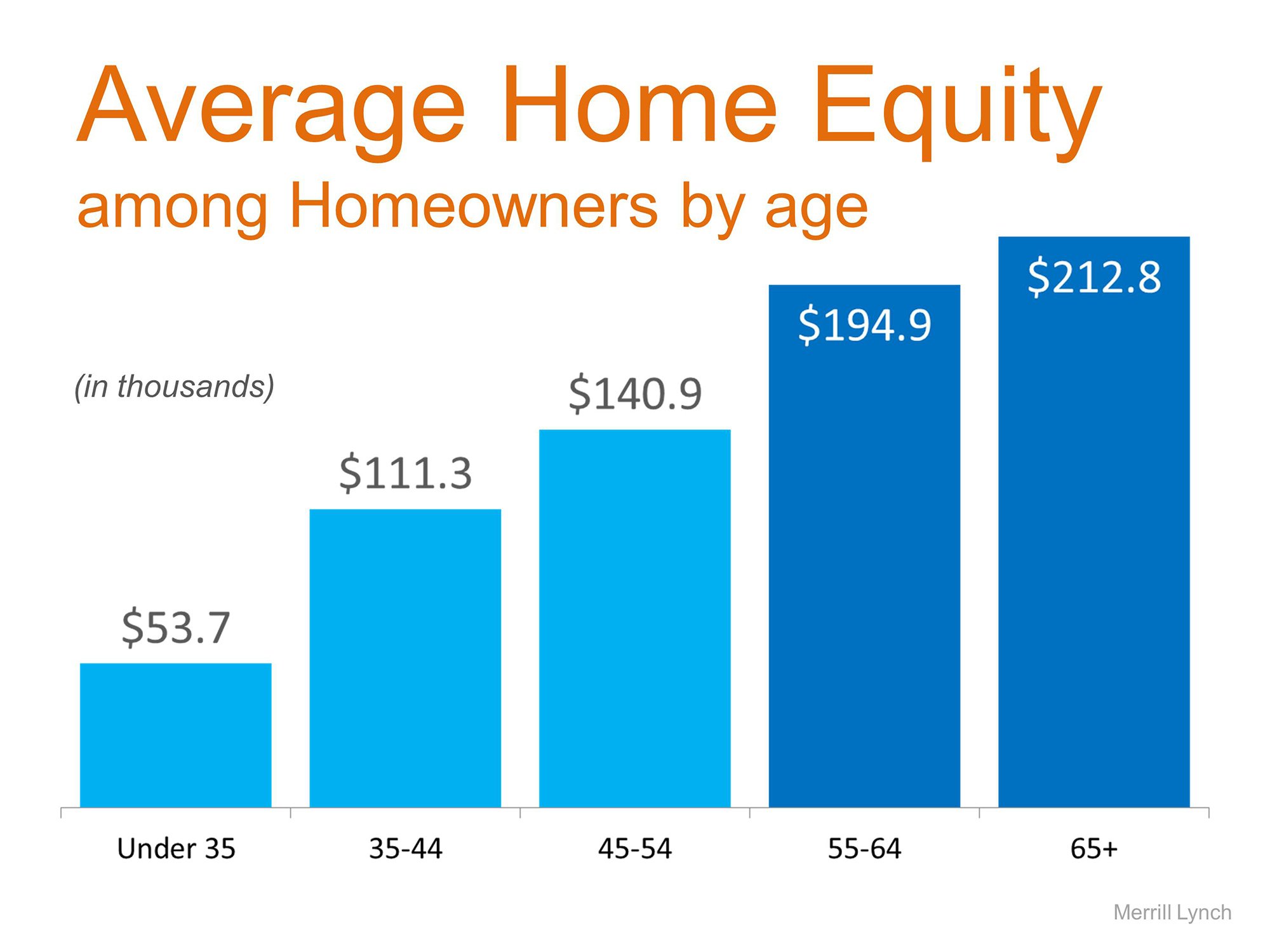
Merrill Lynch published a report earlier this year that showed the average equity homeowners have acquired by certain ages.
Average Home Equity | Simplifying The Market

Bottom Line

Home equity is important to building wealth as a family. Referring to the first scenario above,Freddie Mac explained:
“Now, if you continued to rent, and made the same payment of $684.03 per month, you'd have zero equity and no means to build it. Building equity is a critical part of homeownership and can help you create financial stability.”
Put your housing cost to work for you and your family. Let's get together to explore your options.
When you are ready to put your housing dollars to work toward building wealth, call, text or email.

HAPPY THANKSGIVING

Thursday, July 23, 2015

The Power of Home Equity


Freddie Mac: Equity Matters (a Lot!) | Simplifying The Market

Freddie Mac: Equity Matters (a Lot!)

According to a Merrill Lynch survey, over 80% of the people in this country believe that homeownership is still “an important part of the American Dream”. There are many financial and non-financial reasons people feel this way.
One of the biggest reasons is because it helps build family wealth. Last week, Freddie Mac postedabout the power of home equity. They explained:
“In the simplest terms, equity is the difference between how much your home is worth and how much you owe on your mortgage. You build equity by paying down your mortgage over time and through your home's appreciation. In a nutshell, your money is working for you and contributing toward your financial future.”
They went on to show an example where a person bought a home for $150,000 with a down payment of 10%, resulting in a loan amount of $135,000. The buyer secured a 30-year fixed-rate mortgage at 4.5% with a monthly mortgage payment of $684.03 (not including taxes and insurance). They then illustrated what would happen after seven years of making a mortgage payment, assuming 3% per year home appreciation (the historic national average):
Home Equity | Simplifying The Market
And that number continues to build as you continue to own the home. Merrill Lynch published areport earlier this year that showed the average equity homeowners have acquired at certain ages.
Average Home Equity by Age | Simplifying The Market

Bottom Line

Home equity is important to building wealth as a family. Referring to the first scenario above,Freddie Mac explained:
“Now, if you continued to rent, and made the same payment of $684.03 per month, you'd have zero equity and no means to build it.
Building equity is a critical part of homeownership and can help you create financial stability.”


To see how this applies to your unique situation, call, text or email 

Tuesday, July 21, 2015

Are you happy paying your landlord's mortgage


Stop Paying Your Landlord's Mortgage! | Simplifying The Market

Stop Paying Your Landlord’s Mortgage!

There are some people that have not purchased a home because they are uncomfortable taking on the obligation of a mortgage. Everyone should realize that, unless you are living with your parents rent free, you are paying a mortgage - either your mortgage or your landlord’s.
As The Joint Center for Housing Studies at Harvard University explains:
“Households must consume housing whether they own or rent. Not even accounting for more favorable tax treatment of owning, homeowners pay debt service to pay down their own principal while households that rent pay down the principal of a landlord plus a rate of return.  
That’s yet another reason owning often does—as Americans intuit—end up making more financial sense than renting.”
Christina Boyle, a Senior Vice President, Head of Single-Family Sales & Relationship Management atFreddie Mac, explains another benefit of securing a mortgage vs. paying rent:
“With a 30-year fixed rate mortgage, you’ll have the certainty & stability of knowing what your mortgage payment will be for the next 30 years – unlike rents which will continue to rise over the next three decades.”
As an owner, your mortgage payment is a form of ‘forced savings’ which allows you to have equity in your home that you can tap into later in life. As a renter, you guarantee the landlord is the person with that equity.
The graph below shows the widening gap in net worth between a homeowner and a renter:
Increasing Gap in Family Wealth | Simplifying The Market

Bottom Line

Whether you are looking for a primary residence for the first time or are considering a vacation home on the shore, owning might make more sense than renting since home values and interest rates are projected to climb.
To see how this applies to your unique situation please call, text or email.

Friday, July 10, 2015

PAYING OFF YOUR MORTGAGE EARLY


PAYING OFF YOUR MORTGAGE

If you are looking to pay off your mortgage earlier than you initially planned, there are multiple ways to get this done. Before you begin, check with your bank to make sure there are no hidden fees or charges for paying early.
shutterstock_3405204
Refinance your Mortgage
A good way to put a dent into paying off a 30-year mortgage is to refinance it into a 20-or-15-year loan. 15-year mortgages are the most popular, as there is considerably less mortgage interest in the long run. Be sure before making the change that you are financially able to do so, as changing to a 15-year loan commits you to higher monthly payments. If you are unsure about your financial ability to change to a 15-year, try staying on your 30-year loan and make payments as though you are on the 15-year one. This decreases the amount of time on your mortgage without adding the risk of a late payment.

Add a Little Extra
One of the best ways to pay your mortgage off early is to pay a little bit more where you can afford it. You can either do this by adding a set amount every month, or even just by rounding up every month. Even adding an extra 6 dollars to your monthly payments on a 200,000 dollar 30-year loan will save you 4 payments in the end. Make sure before doing this that you check your contract for any prepayment penalties.
 Unexpected Money
Adding a little bit extra every month is great, but another option to keep in mind is adding any unexpected or extra cash flow to your payment. This can include anything from tax refunds or work bonuses to inheritances and investment earnings. This way it doesn’t feel like you are paying as much as long as you do not rely on that money.

Bi-weekly Payments
In Australia, people make bi-weekly half-payments on their mortgages. Why does this make any difference? Well, there are 12 months in a year, so most people will be paying 12 months worth of their loan. Someone who is paying half of their loan every other week, however, will be paying 13 months of their mortgage since there are 52 weeks in a year. This allows you to pay more of your loan off without feeling like you are paying more than you were before.
 Other Options
These are great ways to cut down on the amount of time you have a mortgage, but there are many other ways as well. These include doubling up on your monthly payment 4 times a year and a money merge account. Money merge accounts should only be used by people who really understand cash management. If using any of the above options, it’s a good idea to get statements from your bank showing how much is still owed and also to make sure that any extra payments are going towards your principal and not being saved until the following year.


Thursday, April 16, 2015

FINANCIAL SENS OF OWNING A HOME


Does Homeownership Make Sense Financially?

Does Homeownership Make Sense Financially? | Simplifying The Market
Everyone knows the social advantages of home ownership. However, some question the financial benefits of owning a home. Three recent studies shed some light on the issue.
RealtyTrac recently released a report comparing home price appreciation to wage growth over the last two years. The study revealed that home price appreciation has outpaced wage growth in 76% of U.S. housing markets during that time period. By how much? Here is a graph showing their findings:
Prices vs Wages | Simplifying The Market
And we all know the importance of home appreciation in determining the net wealth of most American families. Merrill Lynch just issued a report covering the issue. Their findings are shown here:
Home Equity | Simplifying The Market
It obviously makes financial sense to be a homeowner.

But, does it make sense to buy now?

The survey company Pulsenomics just issued their findings on the cost of owning versus the cost of renting. They compared historical averages to the cost you can expect to pay today.
Buy vs Rent | Simplifying The Market
The cost of buying is far below historical averages. Renting is another story.
To see how this applies to your unique situation, just call text or email me.

Tuesday, March 10, 2015

Dream of Home Ownership is Alive and Well

Homeownership is the “American Dream” for a Reason

Homeownership is the “American Dream” for a Reason | Simplifying The Market
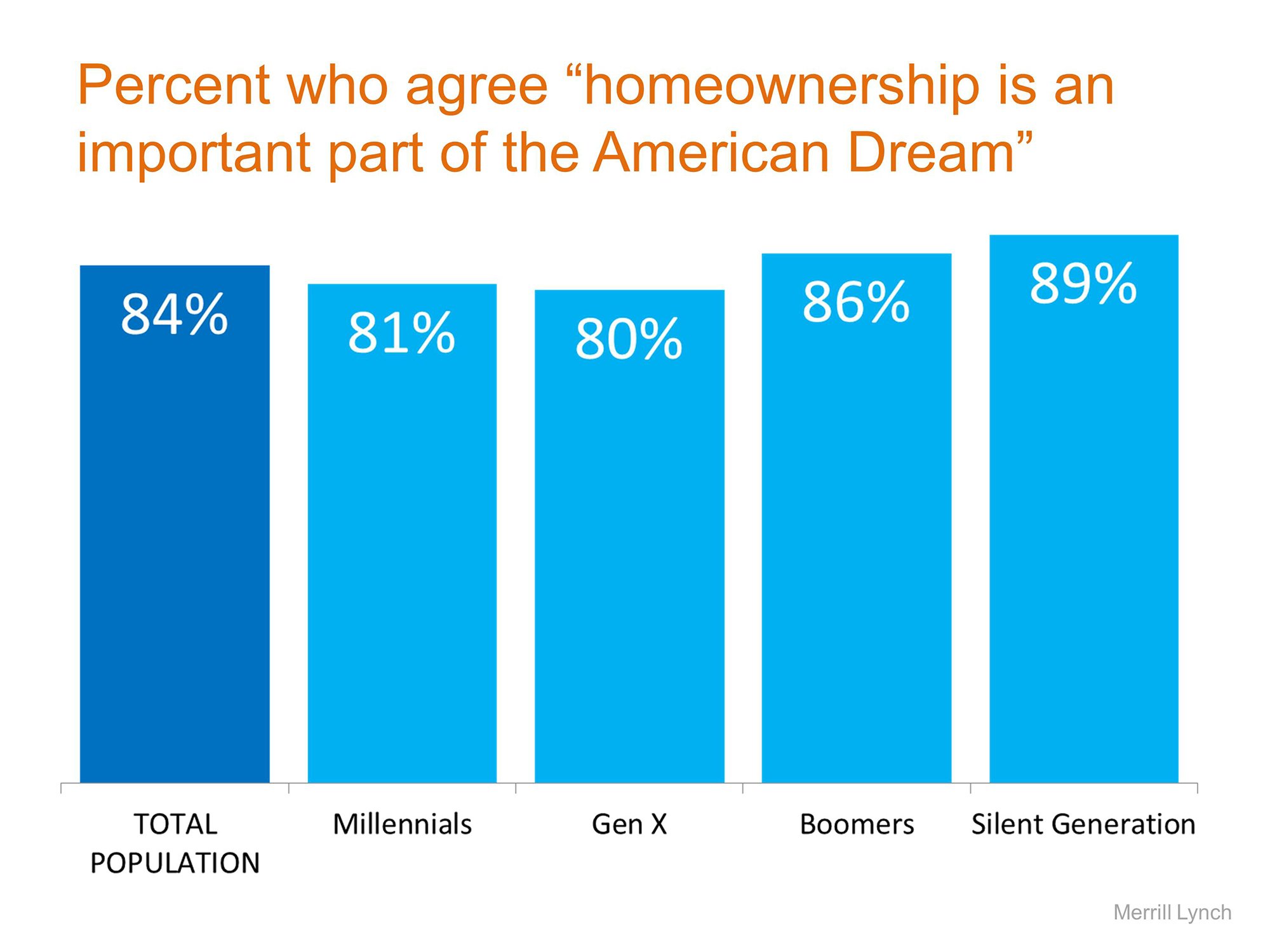
There have been some who have voiced doubt as to whether or not the younger generations still consider buying a home as being part of the “American Dream”. A recent study by Merrill Lynch puts that doubt to rest. According to their research, every living generation still maintains that owning a home is in fact important. Here are the numbers:
American Dream STM
This should not surprise us as many studies have revealed the benefits enjoyed by the families who own their own home. One such study was done by the Joint Center of Housing Studies at Harvard University that addressed a major financial benefit to owning your own home: forced savings. The report explains:
“Since many people have trouble saving and have to make a housing payment one way or the other, owning a home can overcome people’s tendency to defer savings to another day.”
The Merrill Lynch study proves this point with the following data on home equity (a form of savings):
Home Equity

Bottom Line

There are many reasons that owning a home makes sense. The financial reasons are powerful. As one participant in the Merrill Lynch study put it:
“When I was younger, I always worried about that monthly mortgage payment. Now that I am retired, I have the peace of mind of knowing I own my home free and clear.”

When you are ready to pursue your piece of the dream just call text or email 

Friday, January 23, 2015

3 Questions to Ask Before Buying a Home

3 Questions to Ask Before Buying a Home

3 Questions to Ask Before Buying a Home | Simplifying The Market
If you are thinking about purchasing a home right now, you are surely getting a lot of advice. Though your friends and family have your best interests at heart, they may not be fully aware of your needs and what is currently happening in real estate. Let’s look at whether or not now is actually a good time for you to buy a home.
There are three questions you should ask before purchasing in today’s market:

1. Why am I buying a home in the first place?

This truly is the most important question to answer. Forget the finances for a minute. Why did you even begin to consider purchasing a home? For most, the reason has nothing to do with finances. A study by the Joint Center for Housing Studies at Harvard University reveals that the four major reasons people buy a home have nothing to do with money:
  • A good place to raise children and for them to get a good education
  • A place where you and your family feel safe
  • More space for you and your family
  • Control of the space
What non-financial benefits will you and your family derive from owning a home? The answer to that question should be the biggest reason you decide to purchase or not.

2. Where are home values headed?

When looking at future housing values, Home Price Expectation Survey provides a fair assessment. Every quarter, Pulsenomics surveys a nationwide panel of over one hundred economists, real estate experts and investment & market strategists about where prices are headed over the next five years. They then average the projections of all 100+ experts into a single number.
Here is what the experts projected in the latest survey:
  • Home values will appreciate by 4% in 2015.
  • The cumulative appreciation will be 23.5% by 2019.
  • Even the experts making up the most bearish quartile of the survey still are projecting a cumulative appreciation of over 15.1% by 2019.

3. Where are mortgage interest rates headed?

A buyer must be concerned about more than just prices. The ‘long term cost’ of a home can be dramatically impacted by an increase in mortgage rates.
The Mortgage Bankers Association (MBA), the National Association of Realtors, Fannie Mae and Freddie Mac have all projected that mortgage interest rates will increase by approximately one full percentage over the next twelve months.

Bottom Line

Only you and your family can know for certain the right time to purchase a home. Answering these questions will help you make that decision.

Monday, January 12, 2015

Want to be More "Comfortable Financially?

According to Freddie Mac

Renters always have to worry about rent increases while most homeowners have locked in the price per month for 30 years

When you are ready to explore ownership possibilities, just call, text or email.

Monday, October 13, 2014

Decisions Decisions

Every situation is different.
That's why I offer my services as a real estate expert.
Here are a couple of figures from the Federal Reserve which may help in your decision to rent or buy:


And it also makes a difference for your family


No home ownership is not for everyone. But before you decide whether or not it is right for you, let's sit down and take a look at your unique situation.